Showing posts with label Credit Crunch Chic. Show all posts

Tuesday, March 31, 2009

In which Alber Elbaz and I think the same thoughts


From Lisa Armstrong in the Times, today

Elbaz isn't sure: “But they say in a recession that the one thing that doesn't go down is red lipstick.” Not that baldly commercial imperatives sway him. He used red because there have been many mornings, since the sunny, colourful collection that he designed more than a year ago (the one in all the magazines now, coveted by every woman conversant with modern clothes), when he woke up, switched on the news about Gaza or another failing bank and thought, Who Needs Fashion? “But, you know, it's almost like that moment when someone is told they have a disease. Either you say, OK, let me die now, or you say, I'm going to buy a beautiful dress, I'm going to go forward and I'm going to go back to lipstick. And do you know what? A good shoe or a good dress does something to you. It's not just about fashion victims. It really does do something for all women.”

Eccentric as this might seem to those not embalmed in fashion fluid, he is on to something. In The Thoughtful Dresser, Linda Grant's new book about clothes, she recounts the almost life-saving effects on female inmates of a consignment of red lipstick mysteriously delivered the to Bergen-Belsen concentration camp shortly after the British Red Cross arrived in 1945.

Wednesday, March 4, 2009

Very expensive shoes

Balmain, £975

I was looking at a pair of very beautiful £1000 Ferragamo shoes in Grazia yesterday and wondering who buys £1000 shoes? Who are these for? Is this the new price of a shoe which the rest will, as it were, inch up to?

But I remembered a phone call I had the other day from someone with high placed retail contacts who told me that fashion no longer caters for London women, even rich London women. The crazy shoe and crazier bag are for our guests from Russia and the oil states. If they are holding up our retail economy with their slender manicured fingers, perhaps we should be grateful. Otherwise I would have to buy three and a third pairs of £300 shoes.

Tuesday, February 17, 2009

In which I am suddenly of interest

There are only three women in senior management positions on the British High street - Belinda Earl at Jaeger, Kate Bostock at M&S and Jane Shepherdson who joined Whistles from Top Shop. Shepherdson has engineered a buy-out from the Icelandic firm Baugur which hit the iceberg of the Icelandic financial collapse.

The under 25s with jobs and no mortgages, still living at home, continue to shop like it's 2005, but the over 40s are thinking much more carefully about how we spend, and it is to us that fashion is now looking. Shepherdson says:

"It's an exciting time. For years, there hasn't been anything to separate what 18-year-olds and 40-year-olds are wearing. We've all been buying the same things. But now there's a polarisation. There are things now that girls are wearing - like wet-look leggings - I couldn't possibly think of putting on. That's great, I think. Because what it's forced us to say is, what is anyone else going to wear?"
. . .
So what does a grown woman want? "It's the same, in a way," Shepherdson insists. "We want fashion. That isn't going to go away. We want to wake up and feel there's something new we want to wear. We don't want dumbed-down stuff. Classic, basic and understated is not the way through - if you look at something like that, you think 'No, I've already got it'. What you really need is something like a new silhouette to act on."

The day after Shepherdson sealed the new deal, she did what many women do when feeling good - she went shopping, bagging two pairs of Fendi shoes in a lunchtime. In fashion, the emotional and personal is also professional opportunity. "I love this obsession with shoes," she laughs, looking down at the pointy Chloé ankle boots she's wearing under Whistles jeans. "We haven't had a chance to get into it at Whistles, but we are soon. The thing is, you can wear quite plain clothes, but all you've got to do to make it sexy and glam is put on a fierce, aggressive pair of shoes and it completely modernises it. And I think that applies at whatever age."


I think she is right about one thing. If we are going to spend we want it to be special. No duplicates, few safe classics. No half-hearted purchases. You have to feel the love.

Sunday, February 15, 2009

In the bleak midwinter

It's possible to go through life in complete ignorance of what others do in the privacy of their own homes, until you pick up a newspaper which alerts you to this

Tuesday, February 10, 2009

Up where the air is rare


I wonder if there is any way of democratising the couture collections short of plebs like me actually buying something. I do not wish the couture shows to die for want of customers. They represent the pinnacle of what is possible in that humble object, clothing, as a Picasso transcends pigment and canvas. Observe the above shot from Valentino which resembles a Busby Berkely set.

But if they aren't to dwindle, we're going to need to buy a piece. I would suggest selling in-depth video downloads on the internet, but as any fule no, no-one can make money from the internet. Or is that no longer true?

Thursday, February 5, 2009

Joan Burstein on the recession

Joan Burstein (Mrs B) owner of Browns boutique on South Molton Street, who saved up her clothing ration coupons in 1947 to buy her first New Look dress, who went bust in the Sixties and built up her business again from scratch, and who discovered John Galliano, has this to say:

"It's important to be positive when times are hard, but to those who are facing having to start again now I would say this: to have got where you did, you must have had talent, so use it again – and be humble, accept advice and work hard. I worked very hard, and now, I think, it's important to be doing my bit for British businesses because this is our economy and we're stuck with it."

This recession, she says, feistiness creeping into her voice, only feels different to the last one "because then we didn't have it blaring at us from everywhere. Yes, we had a bad time in November but we did well in December. The bottom line is that people still want to buy, and if they haven't got the money they'll save to buy the things that they want.

"There's too much doom and gloom, but I promise you this: people still aspire to own things."

Wednesday, February 4, 2009

Retail meltdown

Baugur, the Icelandic company which owns a large number of high street shops in Britain, has gone bust. Its portfolio includes Hamleys, House of Fraser, jewellers Mappin and Webb and Watches of Switzerland. Enter Sir Philip Green with a shopping list.

A Baugur spokesman explained that talks with the Icelandic banks had collapsed last night. He said that the application "to enter into the moratorium process" - the equivalent of America's Chapter 11 protection - would give the company protection from its creditors for three weeks.

The spokesman also insisted that the day-to-day operations of the companies owned by Baugur would not be affected by today's news.

"The last thing we want to do is fuel fear on the high street that jobs will be lost," he said.

One rival retail executive said selling any retail businesses would be a tough task: "Most of these businesses are doing okay and their managements have been trying to organise buyouts for some time. But it is just impossible to get any financing. The banks just aren't doing any lending. The private equity people have got money but they are still dependent on being able to put debt in as well."

Shares in French Connection slumped by 10% this morning. More than 20% of its shares are owned by a group of Icelandic investors including Baugur. Debenhams shares slipped by 3% this morning.


They own or have stakes in:
French Connection

Mosaic Fashions

Coast

Karen Millen

Oasis

Odille

Principles

Shoe Studio Group

Warehouse

Whistles

Jane Norman

All Saints

Day Birger et Mikkelsen

Matthew Williamson

Steinunn

SD&R

Arcticgroup

Department stores:

Debenhams

House of Fraser

Illum

Magasin Du Nord

Souk

Saks

Food:

Iceland

Speciality:

Hamleys

Aurum

Goldsmiths

Mappin & Webb

Watches of Switzerland

Wyevale Garden Centres

eCommera

Sunday, January 11, 2009

Propping up the dollar


Despite the pound's dismal performance against the dollar, the sight of racks of clothes at 70 per cent off before Christmas at the Chevy Chase branch of Saks defeated my no shopping resolution.

Before and after the Mexico trip I bought two sweaters by a a brand unknown to me, Magaschoni, who make amazing, interesting knitwear. I got a grey and silver flecked zip up cardigan and a black one with fringed collar and cuffs. I feel as if I'm fiddling while Rome burns but the echoing, empty floors of Saks made me also feel rather guilty. No-one was buying anything and the bargains were so great.

A closed down shop is a depressing sight, and that Chevy Chase Saks always makes me feel as if I have returened to the womb.

Meanwhile Pure caashmere (see banner above) is 60 per cent off

Friday, October 10, 2008

Man in a grey suit says don't panic!


comments

stephenmoss

Oct 10 08, 12:08pm (48 minutes ago)
Staff Staff writer

Freepoland's suggestion that we forget money and think about poetry was, presumably, a joke, so it's wonderfully synchronous that, in the UBS clip posted above, the bank's basso profundo economics spokesman Paul Donovan does exactly that – with the UBS global economics department's own version of Rudyard Kipling's "If".

Shares in Kipling have soared following the UBS podcast, reaching $12 a simile in Far Eastern markets. Rupert Brooke is looking strong in the light of many likely casualties in foreign fields. Philip Larkin is selling well in the belief that we will all be utterly depressed and living in Mr Bleaney-style bedsits in a month or two. A lot of investors are putting their faith in poetic gold – Shakespeare, Milton, Donne, Marvell – whose values are unlikely to be shaken in these testing times. But Victorian derivatives are doing badly, and stock in Tennyson is now reckoned to be almost worthless. Henry Paulson is expected to make a statement on iambic pentameters later in the day.

Thursday, October 9, 2008

Fashion: The end (for the moment)


Sarah Mower in the Telegraph

Amazingly, the one thing almost no one in Paris and Milan had applied themselves to is how to make pragmatic, smart, uplifting daywear for someone who goes about her business in a city. Dries van Noten, with his accessible, silky, graphically rational system of dressing, was the only designer in Paris to win universal applause from both press and buyers on that score - and he's a Belgian.

And now I've limped home and reviewed the 148 shows I've seen for next spring/summer, it strikes me that I want nothing to do with anything that's going to be touted as a mainstream fashion trend. In that sense, yep, fashion's over.

If I'm going to spend, it will be on things whose value I calculate in terms of love+price+longevity; stuff I know will still be valid two or three years hence. I would much rather spend money on something that is not an obvious part of a big-brand operation. Oh, and I won't be bothering with passing novelties that turn out to be one-wear disasters: jumpsuits, that means you.

I'm convinced that's the mentality most women will be applying to fashion next year, if not already. I'm only likely to be tempted now by fantastically well-thought-out elements of urban elegance, or things that deliver surprise and delight in a delicious package of usefulness. And when I check back over the season, I find that it's London's designers - usually marginalised as infant crazies or unrealistic fantasists - who have had the clarity to come up with all that.

In the confusion that's reigned over the season, our British-based community of designers (and I include people who show in New York and Paris) pitched things so excellently that their collections stand up incredibly well against much bigger international labels whose shows lurched all over the place.

Wednesday, October 8, 2008

Chocolate: a short announcement


One of my regular readers sells chocolate for a living. A hard, hard life. And in a recession do you want to see this poor working woman lose her livelihood? No!

Well go and sign up to her newsletter and buy some mail order chocolate. We've all got to do our bit to keep the economy going.

And here is a short educational film on the subject of choconomics.

Support the economy during British Chocolate Week

Short selling finally explained

Short selling is like borrowing a pound of tea while the price is say, $5 per pound and selling it at that price. Then when the price drops to $3, you pay the current price to the person you "borrowed" it from, netting $2.


Thank you deja pseu.

And here I will add the football 'offside rule', explained:

You're in a shoe shop, second in the queue for the till. Behind the shop assistant on the till is a pair of shoes which you have seen and which you must have.

The 'opposing' female shopper in front of you has seen them also and is eyeing them with desire.

Both of you have forgotten your purses.

It would be totally rude to push in front of the first woman if you had no money to pay for the shoes.

The shop assistant remains at the till waiting.

Your friend is trying on another pair of shoes at the back of the shop and sees your dilemma.

She prepares to throw her purse to you.

If she does so, you can catch the purse, then walk round the other shopper and buy the shoes.

At a pinch she could throw the purse ahead of the other shopper and, *whilst it is in flight* you could nip around the other shopper,
catch the purse and buy the shoes.

Always remembering that until the purse had *actually been thrown* it would be plain wrong to be forward of the other shopper.

Tuesday, October 7, 2008

Pleasure


Shares in my bank fell by 40 per cent on the markets yesterday, so I could lose everything - my whole overdraft. God only knows what the hell is going on with the economy, someone sent me an easy-to-understand summary of short selling: I gave up after the second sentence. However, something seems to be up with capitalism and where's it all going to end?

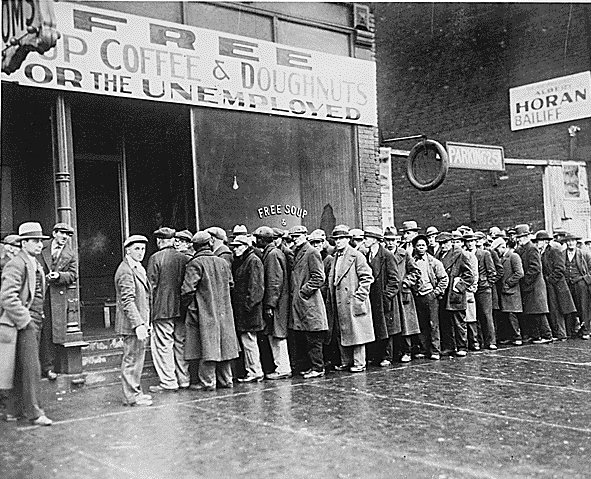
Yesterday I was on the way to Rigby and Peller to be fitted for the bra to go with my my Booker dress and walking through Mayfair, down Conduit Street and past Vivienne Westwood, Donna Karan could not help but wonder if this was it, the end of the life we've known, and in a year's time would I walk that same street and see boarded up shops, beggars, soup kitchens?

By disposition I prefer pleasure to self-sacrifice, hope to pessimism and despair. I took comfort in the fact that I have a wardrobe full of beautiful clothes to see me through the Great Slump. I had a bit of time to kill before my bra fitting appointment and I stepped into the Mille Harris shop and tearoom. As every fule no, in a recession lipstick sales increase, as women buy a low cost item to cheer themselves up. I spent a delicious half hour in Miller Harris drinking a fragrant cup of her own handblended tea, eating a lemon shortbread biscuit and browsing through the magazines before inhaling a divine sniff of expensive scent. It cost me a fiver and if I'd had time I would have stayed there for an hour.

And this is how to get through the times that lie ahead. Find small pleasures, anything to cheer ourselves up. We are going to need all the pleasure we can get.

And not long after it was explained to me that alhough I am 57 years old, I do not know how to put on a bra.

Thursday, October 2, 2008

Off piste, off trend


I suppose it must be the economy, but equally I think it's fashion's own desperation and exhaustion: I am truly bored with 'trends.'

Here's the Guardian with a list of what we're to expect:

Strong-shouldered jackets
Massive shoulders at shows like Balmain mean the style will last way into 2009.

Skin-tight trousers
This silhouette rules for next season - bodysuits at Jil Sander and Balenciaga, and tight pants at Givenchy.

Painful shoes
If your heels are huge, like the YSL Tribute boots, then a scrum will form around you, looking for the sort of killer shoes that saw models tumble at Prada.

No bag
When Carine Roitfeld began arriving at the shows carrying her phone and nothing else, the big-bag trend was over. If you must have a bag, then make it a clutch, like those that were just seen at Balenciaga.


I am going to be following none of these. I was at L.K Bennett yesterday taking back the shoes which Av had deemed not right for my dress and I was only offered an exchange or credit note. It was a real struggle to find any non-stilettos (I don't wear flats) and in the end found a pair of square-toed purple patent pumps with a stacked heel. When I got home there was an email from a fashion editor friend telling me her day-in-day-out shoes are stacked heel platforms by Stewart Weitzman from Russell and Bromley. So even the fashion editors aren't wearing these sky high shoes. Walking through Hanover Square yesterday I saw three young women who were; they were chatting on the windy street before turning and trooping painfully back into Vogue House, headquarters of Conde Nast. Their bosses know better.

I confess I have been on a buying spree lately and this must be the last gasp before the retail economy contracts and we start to see bankruptcies. I bought a scarf and a necklace yesterday. I could still be wearing them at 80 and might have to.

We know there must be fashion even in a slump. That's what fashion is, that's what fashion does, it rises above. One of my favourite films is Preston Sturges Sullivan's Travels, about the necessity of laughter. But fashion needs to remember that in a depression we're all going to need cheering up, and art school clothes that belong in an art installation, self-referential and ultimately quite boring, are literally museum pieces.

Sunday, July 27, 2008

The new economising

. . . my own much-loved purchase from a previous downturn was a multicoloured Missoni coat, in vivid tangerine and ochre zigzags. It was half price in a sale, though still not cheap, yet it's worked out as one of the most economical purchases I've ever made, because I've worn it thousands of times (thus justifying the cost- per-wear equation). And, though it might sound excessive, I swear it's actually practical, because it's literally over-the-top - you can fling it over a pair of old jeans or on top of a little black dress, and immediately look as if you've made an effort.


Justine Picardie in the Telegraph today

Wednesday, July 23, 2008

Credit crunch haberdashery

In a rush this morning, I advise you just to read this, about the new credit crunch haberdashery - the make do and mend de nos jours.

Monday, July 14, 2008

AW08 mid-market

The marketing executive of L.K. Bennett has left a comment in my post on the rise of the mid-market. She has provided a link to some of the pieces coming in for Autumn. Go take a look.

There are some very good tops.

Sunday, July 13, 2008

More or less


Unsuprisingly, the Sunday Times reports today that the fashion retail sector which is experiencing an upsurge is the middle market. Buyers are trading down from Harvey Nicks and trading up from M&S and Primart.

Many of the brands in this not-too-expensive, not-too-cheap niche are small compared with the retail giants. What sets them apart is a focus on quality, design and a commitment to producing fashion you might want to keep. In a tough economic climate, these values chime with the way we want to live now, and they are good for business. Jigsaw reported a substantial sales rise this year and is about to launch an e-commerce site. Banana Republic isn’t having a summer sale — because there is no left-over stock. Reiss and All Saints are expanding rapidly, and Jaeger posted a profit of £82m last year. One of the most exciting fashion relaunches will also be in the middle market. I’ve had a sneak peek at the first collection by the former Topshop guru Jane Shepherdson for Whistles, and it is full of grown-up, gorgeous, covetable clothes.

A black jacket I bought at Whistles two and a half years ago for £175 has several years more life in it, in terms of both quality and style. I was looking in L.K. Bennett the other day, and the small number of pieces they have started to get in for Autumn look very promising, as do the shoes.

Thursday, July 3, 2008

Haute couture, an economist writes

Do I look a leetle Left Bank?

I was halfway through a very interesting and detailed account in the Guardian of why couture is not subject to the credit crunch when, scrolling back to see if it had been written by Jess Cartner-Morley, the fashion editor, or Hadley Freeman, her deputy, I realised that it had been written by neither, but the paper's economics editor, who they'd send over to Paris for the shows. Fact fact fact fact.

Tim Jackson, principal lecturer at the London School of Fashion, says that the last big shock to luxury brands came after 9/11, because people stopped travelling, and a large proportion of luxury goods are bought by the well-off on their travels. There was, he says, a deliberate attempt to broaden the appeal of brands, with the sale of bags, jewellery and shoes that, while still expensive, were more affordable. "These goods have no issues with what's fashionable or size, and the goods have a high mark-up. There is a huge increase in directly operated stores, but they need high turnover to pay the overheads on the stores." Jackson says it will be this bit of the market - not the more exclusive haute couture niche - that will be affected by the credit crunch. The lay-offs in the financial sector, falling property prices and higher inflation are all likely to have an impact.

In Paris earlier, Sassi made the same point. "The issue is not the super-rich, some of whom are doing well out of the crisis, but the people below the super-rich. Haute couture will last for ever. It will only die when there are no ladies who are interested in beauty or feeling unique, or exclusivity."

While this helps explain the durability of haute couture, it doesn't quite explain why business has been so good in recent years. There are, however, solid economic reasons for the upturn. One factor is that the rich keep getting richer, and there are more of them. The compression of incomes seen in the decades after the second world war has been reversed; in Britain, for example, the gap between rich and poor has widened over the past decade, largely as a result of the salaries for the top 0.5% of earners.

Nick Tucker, market leader for the UK and Ireland at Merrill Lynch Global Wealth Management, said last week: "Spending by high net worth individuals [HNWIs] and ultra-high net worth individuals [UHNWIs] remains robust. The ongoing strength in both the global art market and luxury industries highlights that the wealthy will continue to spend despite clearly worsening economic conditions and explains why, historically, these industries weather global downturns."

According to a report by Merrill Lynch and Capgemini last month, there are now just over 10 million HNWIs in the world with a total wealth of $40 trillion. To qualify, you have to have net assets - excluding the value of your home - of $4m. Qualifying as an UHNWI is tougher; there are 100,000 globally with net assets of $30m or more.

Tuesday, May 27, 2008

Into the dark


This rather muddled piece on credit-crunch chic takes its cue from the M&S A/W08 range which was had its press show last week. It seems to think that we'll all be buying colour and pattern because black is too depressing and we'll need to cheer ourselves up.

It's talking about style-conscious women who have been buying a mix of Primark, Zara and some designer labels. Will they now cut the designers? I'm not a trend-spotter and I can't speak of what others might do, but the credit crunch (and it has had knock-on effects on me) means that I can no longer afford to buy disposable clothing. Stopping and thinking, asking if this will last more than a season, has now become instinctive.

On the other hand, do I want to be wearing the same black jacket for the next seven years at every party? I don't go to huge numbers of parties, but I do go to several, and wearing the same thing every time makes me feel like when I come in people think, 'There she is, in her jacket.'